
The United Kingdom has long remained one of the most popular study destinations for Pakistani students. World-class universities, internationally recognized degrees, shorter course durations, and excellent post-study work opportunities continue to attract thousands of students every year, making study in the UK for Pakistani students a highly attractive option for higher education and global career growth.
However, many students and parents in Pakistan are now noticing a growing challenge: UK universities are becoming increasingly strict when processing applications from Pakistani students.
From detailed financial checks to credibility interviews and document verification, universities are now carefully evaluating every aspect of a student’s profile before issuing admission offers and Confirmation of Acceptance for Studies (CAS).
This growing scrutiny has created anxiety among genuine students who want to study in the UK honestly and legally. The good news is that authentic and well-prepared students still have strong chances of success. Understanding why universities are tightening their policies can help students avoid common mistakes and improve their chances of admission and visa approval.
Why Are UK Universities Tightening Their Policies?
UK universities operate under strict immigration compliance rules established by the UK government and UK Visas and Immigration (UKVI). Universities that sponsor international students must ensure that applicants are genuine students who intend to study seriously and comply with visa conditions.
In recent years, the UK government has increased pressure on universities to reduce visa misuse and maintain high compliance standards. As a result, universities are now more cautious while assessing applications from countries with higher visa refusal rates or concerns about immigration compliance.
Several factors have contributed to this stricter approach:
- Increasing cases of fake or altered academic documents
- Fraudulent financial statements
- Students using study visas primarily for immigration purposes
- Poor interview performance by applicants
- Rising visa refusal rates from certain regions
- Concerns about students failing to attend classes after arrival
Universities are also trying to protect their sponsor licenses. If too many students from a university face visa refusals or violate immigration rules, the institution can face serious consequences from UK authorities.
Because of this, many universities now conduct stricter screening before issuing CAS letters.
Read more: UK Student Spouse Visa Guide for Pakistanis 2026
UK Universities Increasing Deposits and Restricting Pakistani Students for 2026 Intake
In addition to stricter credibility interviews and financial verification, many UK universities have also introduced higher tuition deposits, additional compliance checks, and temporary recruitment restrictions for Pakistani students.
These measures are largely linked to new UK Home Office compliance rules that came into effect in late 2025. Universities must now maintain very low visa refusal rates to protect their student sponsor licenses. As a result, institutions are becoming more cautious while issuing CAS letters to applicants from countries considered “high-risk” for visa refusals.
Why Some Pakistani Regions Face Higher UK University Scrutiny
Another important factor behind the growing scrutiny of Pakistani students pursuing study in the UK from Pakistan is the higher rate of student non-compliance reported from certain regions of Pakistan.
According to education consultants and university compliance concerns, some UK universities have observed that students from particular areas have higher rates of:
- Abandoning studies after arriving in the UK
- Failing to attend university classes regularly
- Moving illegally to other European countries
- Seeking asylum after arrival
- Using the student route primarily for settlement purposes rather than education
As a result, universities have started identifying certain locations as “high-risk recruitment regions” based on historical visa compliance patterns. This has directly impacted the overall study in the UK from Pakistan process, leading universities to apply stricter verification checks and additional scrutiny during admissions and visa assessments.
Regions that are often mentioned in recruitment risk discussions include:
- Mandi Bahauddin
- Azad Kashmir
- Some areas of Khyber Pakhtunkhwa (KPK)
It is important to understand that this does not mean students from these areas are not genuine. Thousands of hardworking and legitimate students from these regions successfully study in the UK every year.
However, because some applicants from these areas reportedly left universities or breached visa conditions in the past, universities are now applying stricter screening procedures for new applicants.
Why Universities Are Taking These Measures
UK universities are under increasing pressure from the UK Home Office to maintain low visa refusal and non-enrollment rates.
If too many students:
- Fail to enroll,
- Stop attending classes,
- Violate visa conditions, or
- Disappear after arrival,
the university’s sponsor license may come under scrutiny.
Because of this, universities now prioritize:
- Genuine study intentions
- Financial transparency
- Strong academic backgrounds
- Clear career goals
- Credible interview performance
This stricter approach is primarily a compliance and risk-management strategy rather than a blanket rejection of Pakistani students.
Read more: Cost of Studying in the UK for Pakistani Students in 2026
Universities Increasing Initial Deposits for Pakistani Students

Several universities have increased the amount Pakistani students must pay before receiving a CAS letter.
For example, the University of Hull has introduced a significantly higher tuition fee deposit requirement for students from Pakistan. According to the university’s official guidance, Pakistani students are now required to pay a £10,000 tuition fee deposit before CAS issuance.
Many universities are also:
- Demanding earlier tuition fee payments
- Conducting stricter source-of-funds checks
- Requesting sponsor income verification
- Asking for detailed bank transaction histories
- Requiring additional compliance interviews
These stricter financial measures are intended to reduce visa refusal risks and ensure only financially genuine students proceed to visa application stages.
Some institutions are also limiting:
- Late applications
- Students with low IELTS/PTE scores
- Applicants with long study gaps
- Complex financial sponsorship cases
Education experts believe more universities may continue increasing deposits for Pakistani students during future intakes if visa refusal rates remain high.
UK Universities That Have Restricted or Suspended Pakistani Student Recruitment
Several UK universities reportedly paused, restricted, or reduced recruitment from Pakistan for certain 2026 intakes due to visa compliance concerns and rising refusal rates.
The universities mentioned in media reports include:
- University of Chester — reportedly suspended recruitment from Pakistan until Autumn 2026 due to rising visa refusal rates.
- University of Wolverhampton — reportedly stopped accepting undergraduate applications from Pakistan for certain intakes.
- University of East London — reportedly suspended recruitment from Pakistan for selected intakes.
- University of Sunderland — reportedly tightened recruitment policies for Pakistani applicants.
- Coventry University — reportedly imposed restrictions on recruitment from Pakistan and Bangladesh.
- University of Hertfordshire — reportedly paused recruitment from Pakistan until September 2026 while under enhanced Home Office compliance monitoring.
- Oxford Brookes University — reportedly paused some undergraduate recruitment from Pakistan for January 2026 intake.
- BPP University — reportedly introduced temporary restrictions as part of a “risk mitigation” strategy.
It is important to note that these policies can change frequently. Some restrictions may apply only to:
- Specific intakes
- Certain course levels
- Selected campuses
- High-risk applicant profiles
Students should therefore always verify the latest admission status directly with universities or through trusted consultants before applying.
Read more: UK Study Documents for Pakistani Students: 2026 Checklist
Major Reasons Pakistani Students Face More Scrutiny

1. Fake or Altered Documents
One of the biggest reasons UK universities have become stricter is the submission of fake documents by some applicants applying to study in the UK from Pakistan. These may include:
- Forged academic transcripts
- Fake IELTS or English test results
- Altered bank statements
- Fabricated experience letters
- Fake tuition fee receipts
Universities now verify documents more aggressively, especially for students planning to study in the UK from Pakistan. Many institutions directly contact banks, colleges, and testing bodies to confirm authenticity.
Submitting fraudulent documents can lead to:
- Immediate rejection
- Visa refusal
- Multi-year UK immigration bans
- Loss of tuition fees already paid
- Permanent damage to immigration history
This has caused universities to carefully scrutinize applications from regions where document fraud cases have increased, making it more important than ever for genuine students who want to study in the UK from Pakistan to submit authentic and complete documentation.
2. Weak Credibility Interview Performance
Many Pakistani students struggle during university or UKVI credibility interviews.
Students often fail to explain:
- Why they selected a particular course
- Why they chose a specific university
- Their future career plans
- How the course relates to previous education
- Details about their financial sponsors
When students appear confused or give memorized answers, universities may doubt whether they are genuine students.
As a result, universities now conduct more detailed pre-CAS interviews before issuing admission confirmations.
3. Poor Academic Background
Some students apply for courses that do not match their previous education or work experience. Others apply with very low grades or long unexplained study gaps.
For example:
- A commerce student suddenly applying for a nursing degree
- Large academic gaps without proper explanation
- Repeated visa refusals without clarification
Universities now closely evaluate academic progression and logical course selection before approving applications.
4. Lack of English Communication Skills
Even when students meet minimum IELTS or PTE requirements, universities may still assess practical communication ability during interviews.
Poor communication can create doubts regarding:
- Ability to study in English
- Classroom participation
- Genuine academic intentions
This is why strong IELTS or PTE preparation has become more important than ever.
Students can improve their profiles by preparing through professional IELTS and PTE training programs before applying for UK admissions.
5. Use of Unethical or Unauthorized Agents
Unfortunately, some students rely on agents who provide misleading information or encourage shortcuts.
These unethical practices may include:
- Fake financial documents
- False work experience claims
- Misleading Statements of Purpose
- Incorrect visa information
Universities have become increasingly aware of these practices and now investigate applications more carefully.
This is why students should always apply through trusted and experienced study abroad consultants who prioritize transparency and legal compliance.
The Impact of UK Dependent Visa Restrictions
Recent UK immigration changes have also influenced how universities assess Pakistani students.
The UK government introduced restrictions limiting dependent visas for many international students, especially those enrolled in taught master’s programs.
Because of these changes, universities are now more cautious when evaluating:
- Married applicants
- Financial capability
- Genuine study intentions
- Immigration motivations
Institutions want to ensure students are primarily focused on education rather than using the student route mainly for long-term settlement purposes.
This does not mean married students cannot study in the UK. However, applicants now need stronger financial documentation and clearer academic motivations.
Financial Verification Has Become Much Stricter
Financial scrutiny is now one of the most important parts of the UK admission and visa process.
Universities and visa officers carefully examine:
- Source of funds
- Bank statement history
- Sponsor income
- Sudden large deposits
- Tuition fee payments
Students sometimes make the mistake of depositing large amounts into bank accounts shortly before visa applications. Such transactions often raise red flags.
Universities now prefer transparent and verifiable financial records.
Universities Are Avoiding Risky Applications
UK universities are increasingly focusing on risk management.
Applications may receive additional scrutiny if they involve:
- Multiple previous visa refusals
- Poor academic performance
- Weak English scores
- Unclear study plans
- Immigration history concerns
- Large study gaps
- Inconsistent documents
This does not automatically mean rejection. However, students with complex profiles must prepare their applications very carefully.
How Genuine Pakistani Students Can Still Get UK Admission Successfully
Despite stricter policies, thousands of Pakistani students continue to secure UK admissions and visas every year.
Here are some important ways genuine students can improve their success chances:
Submit Genuine Documents Only
Never submit fake or altered documents. Even a small inconsistency can lead to serious consequences.
Always ensure:
- Academic records are authentic
- Financial documents are verifiable
- Information is consistent across applications
Improve IELTS or PTE Scores
Strong English proficiency helps students:
- Perform better in interviews
- Gain university confidence
- Improve visa approval chances
Higher IELTS or PTE scores can also strengthen admission opportunities at reputable universities.
Prepare Thoroughly for Interviews
Students should practice:
- Course-related questions
- Career goals
- Financial explanations
- University research
Confidence and clarity during interviews can significantly improve credibility.
Choose Proper Academic Progression
Select courses aligned with:
- Previous education
- Career goals
- Work experience
Logical progression helps universities understand your genuine academic intentions.
Explain Study Gaps Properly
If you have gap years, provide clear explanations supported by evidence such as:
- Employment records
- Business experience
- Training certificates
- Family responsibilities
Unexplained gaps often create doubts.
Apply Through Trusted Consultants
Ethical consultants can help students:
- Avoid mistakes
- Prepare strong applications
- Understand UKVI requirements
- Improve interview performance
Reliable guidance can make a major difference during the admission and visa process.
Read more: How Much Fee for UK Study from Pakistan?
The Role of Ethical Study Abroad Consultants
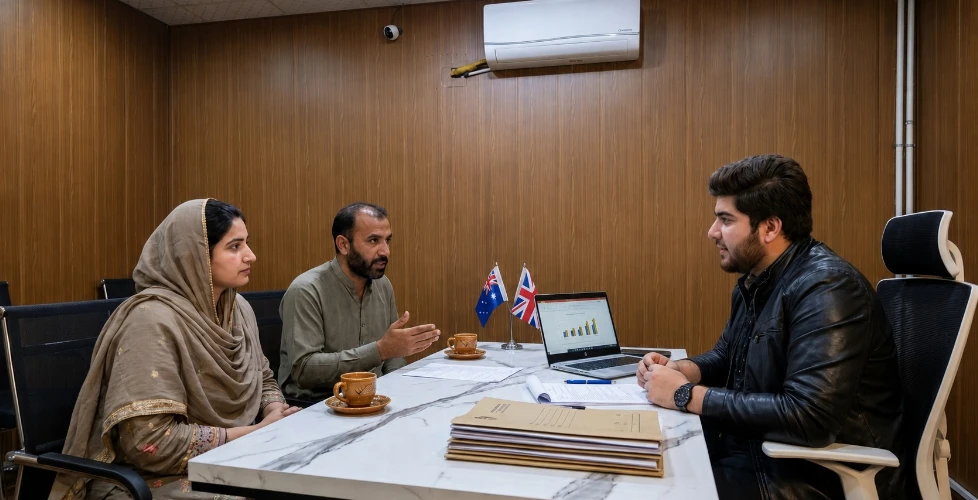
Professional study abroad consultants play an important role in helping students navigate increasingly strict UK admission requirements.
An experienced consultancy can assist with:
- University selection
- Application preparation
- SOP guidance
- Interview training
- Document verification
- Visa file preparation
- Financial guidance
Students should avoid agents who promise “guaranteed visas” or encourage document manipulation.
At Global Migration Advisors, students receive professional guidance focused on transparency, compliance, and genuine academic success.
Frequently Asked Questions (FAQs)
Why are UK universities rejecting more Pakistani students?
UK universities are increasing scrutiny due to concerns regarding fake documents, visa refusals, and immigration compliance requirements imposed by UK authorities.
Is UK student visa refusal increasing for Pakistani students?
Some students face refusals due to weak financial documentation, poor interview performance, or failure to meet the genuine student requirement.
What documents are checked by UK universities?
Universities may verify:
- Academic transcripts
- English test results
- Bank statements
- Sponsor documents
- Experience certificates
What is a credibility interview?
A credibility interview assesses whether a student is genuine and capable of successfully studying in the UK.
Can fake documents lead to UK bans?
Yes. Fake documents can result in visa refusal, immigration bans, and loss of future study opportunities.
How can Pakistani students improve UK visa success chances?
Students should:
- Submit genuine documents
- Prepare thoroughly for interviews
- Maintain strong financial records
- Improve English proficiency
- Seek guidance from ethical consultants
Conclusion
UK universities are undoubtedly becoming more cautious while assessing Pakistani student applications. However, this does not mean genuine students have lost their opportunities.
The UK remains one of the best destinations for higher education, and thousands of Pakistani students continue to achieve successful admissions every year.
The key is preparation, honesty, transparency, and proper guidance.
Students who submit genuine documents, demonstrate clear academic goals, maintain strong financial records, and prepare seriously for interviews can still achieve their dream of studying in the UK.
If you are planning to study in the UK and want professional guidance for university admissions, IELTS/PTE preparation, or visa processing, contact Global Migration Advisors for expert support.