Global Migrations

MBBS in Romania for Pakistani Students: Fees, Colleges & Process

MBBS in Romania for Pakistani Students: Fees, Colleges & Process

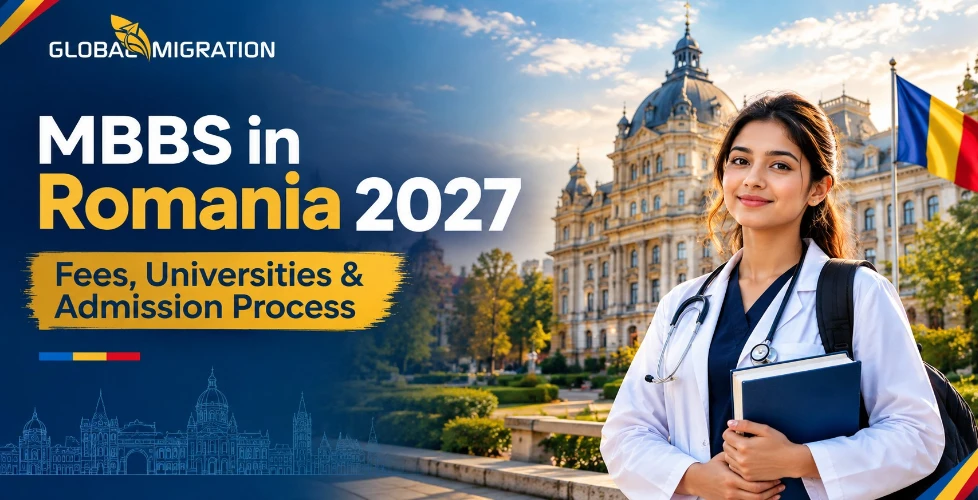
If you are a Pakistani student searching for an affordable, internationally recognized MBBS degree, MBBS in Romania deserves your full attention. Romania has quietly emerged as one of the most credible and budget-friendly medical education destinations for Pakistani students who want a European degree without the financial burden of studying in the UK or Germany. In 2026, Romanian medical universities continue to attract hundreds of international students every year — and Pakistani students are increasingly part of that growing community.

This comprehensive guide covers everything you need to know about MBBS in Romania — from tuition fees and top medical colleges to the admission process, student visa steps, recognition status in Pakistan, scholarships, and long-term career prospects.

📌 Quick Answer: What is MBBS in Romania?

MBBS in Romania is a 6-year English-taught medical degree program available at NMC and WDOMS-recognized universities. Annual tuition fees range from €5,000 to €8,000. Pakistani students do not require NEET for admission. The degree is internationally recognized and accepted by PMDC/PMC in Pakistan.

Why Study MBBS in Romania?

Romania has become one of the fastest-growing MBBS destinations among Pakistani students, and the reasons are both practical and compelling. As a full member of the European Union, Romania offers internationally recognized medical degrees at a fraction of the cost charged by universities in the UK, Germany, or Australia. For a Pakistani family investing in a child’s medical education, this combination of quality, affordability, and global recognition is difficult to ignore.

Romanian medical universities offer six-year MBBS programs fully taught in English, which means Pakistani students can enroll without learning the Romanian language from day one. The country is home to some of the oldest and most respected medical institutions in Eastern Europe, several of which hold recognition from major global bodies including the National Medical Commission (NMC) of India, the Pakistan Medical and Dental Council (PMDC/PMC), and the World Directory of Medical Schools (WDOMS).

Beyond the academic advantages, Romania provides a safe, student-friendly environment with a lower cost of living compared to most EU countries. Cities like Bucharest, Cluj-Napoca, and Iași have growing international student communities, making it easier for Pakistani students to settle in, make friends, and focus on their studies.

Based on current admission trends for 2026, interest in MBBS in Romania from Pakistani students has increased significantly. Our consultants at Global Migration regularly assist Pakistani students with the complete process, and we have seen first-hand how Romanian medical universities are becoming a reliable pathway to a global medical career.

Key Advantages at a Glance:

  • 6-year MBBS program taught fully in English
  • NMC, PMDC/PMC, and WDOMS-recognized universities
  • Annual tuition fees between €5,000 and €8,000
  • EU-recognized degree with global career value
  • No NEET requirement for admission
  • Lower living costs compared to Western Europe
  • Pathway to appear in USMLE, PLAB, and NLE (Pakistan)
  • Growing Pakistani student community in major cities
 

Read More: Is Romania a Good Option for Pakistani Students?

Top Medical Universities in Romania

Top Medical Universities in Romania

Romania hosts several medical universities with decades of international reputation. Each institution offers English-medium MBBS programs and holds recognition from key global medical bodies. Below are the most prominent options for Pakistani students.

Carol Davila University of Medicine and Pharmacy – Bucharest

Carol Davila University is Romania’s most prestigious medical institution and is consistently ranked among the top medical universities in Eastern Europe. Located in the capital city of Bucharest, this university has been training doctors since 1857. Its medical programs are recognized by the NMC, WDOMS, and multiple European medical bodies. The university attracts thousands of international students annually and offers a vibrant academic and social environment.

Iuliu Hațieganu University of Medicine and Pharmacy – Cluj-Napoca

Based in Cluj-Napoca, one of Romania’s most modern and cosmopolitan cities, Iuliu Hațieganu University is a top-ranked institution known for its research output and clinical training facilities. The university is internationally recognized and is a popular choice among Pakistani students looking for MBBS in Romania with strong academic standards and excellent hospital affiliations.

Grigore T. Popa University of Medicine and Pharmacy – Iași

Grigore T. Popa University in Iași is one of the oldest and most respected medical schools in the country. With a strong focus on clinical training and research, this university is recognized by WDOMS and NMC. Iași is also more affordable than Bucharest in terms of living costs, making this university especially attractive to students on a tighter budget.

Victor Babeș University of Medicine and Pharmacy – Timișoara

Situated in Timișoara — a multicultural city in western Romania — Victor Babeș University offers high-quality English-medium MBBS programs. The city’s proximity to Central Europe adds lifestyle and travel advantages, and the university’s modern facilities and experienced faculty make it a solid choice for Pakistani students.

Comparison Table: Top Medical Universities in Romania

University 

City 

Established 

NMC Recognized 

Annual Tuition (Approx.) 

Carol Davila University 

Bucharest 

1857 

Yes 

€8,000 – €10,000 

Iuliu Hațieganu University 

Cluj-Napoca 

1919 

Yes 

€8,500 – €10,000 

Grigore T. Popa University 

Iași 

1879 

Yes 

€7,500 – €9,000 

Victor Babeș University 

Timișoara 

1945 

Yes 

€8,000 – €8,500 

MBBS in Romania Fees for Pakistani Students

One of the most frequent questions from Pakistani students and their families concerns tuition fees. MBBS in Romania is significantly more affordable than studying medicine in the UK, the US, or even some countries in Asia when quality and recognition are factored in. However, fees vary depending on the university, program year, and whether the student is applying through the university directly or through a verified agent.

Tuition Fee Breakdown

On average, Pakistani students can expect the following fee ranges for a complete 6-year MBBS program in Romania:

Year 

Estimated Annual Fee (EUR) 

Estimated Annual Fee (PKR) 

Year 1 

€5,500 – €8,000 

PKR 17–25 lakh (approx.) 

Year 2 

€5,500 – €8,000 

PKR 17–25 lakh (approx.) 

Year 3 

€6,000 – €8,500 

PKR 18–26 lakh (approx.) 

Year 4 

€6,000 – €8,500 

PKR 18–26 lakh (approx.) 

Year 5 

€6,500 – €9,000 

PKR 20–28 lakh (approx.) 

Year 6 

€6,500 – €9,000 

PKR 20–28 lakh (approx.) 

Total (6 Years) 

€36,000 – €51,000 

PKR 1.1 – 1.6 crore (approx.) 

PKR conversions are approximate and subject to exchange rate fluctuations. Please confirm current rates at the time of application.

Compared to MBBS in the UK (which can cost £250,000+ for international students), Romania offers a dramatically more accessible pathway to the same globally recognized qualification.

Additional costs to consider include application fees (usually €100–€200), document attestation, and university registration charges, which are generally one-time payments made during enrollment.

Cost of Living in Romania for Students

Studying abroad is never just about tuition fees — the monthly cost of living is equally important for Pakistani families planning their budget. Romania remains one of the most affordable countries in the entire European Union, and this affordability is a significant part of its appeal for international medical students.

Monthly Living Cost Breakdown for Pakistani Students in Romania

Expense Category 

Estimated Monthly Cost (EUR) 

University Dormitory 

€80 – €150 

Private Apartment (shared) 

€200 – €400 

Food and Groceries 

€150 – €220 

Transportation (public) 

€15 – €30 

Internet and Utilities 

€30 – €60 

Books and Study Materials 

€20 – €50 

Personal and Miscellaneous 

€50 – €100 

Total Monthly Estimate 

€400 – €700 

Students studying at Grigore T. Popa University in Iași or Victor Babeș University in Timișoara often report lower living costs compared to those in Bucharest. Choosing a city strategically can reduce total monthly expenses by 20–30% without compromising educational quality.

For a complete 6-year program, students should budget approximately €28,000 to €42,000 for living costs in addition to tuition fees.

Read More: UK Student Spouse Visa Guide for Pakistanis 2026 

Eligibility Criteria

Understanding the eligibility requirements before applying for MBBS in Romania saves time and helps students prepare a stronger application. Romanian medical universities have clear and consistent requirements for international students.

Academic Eligibility:

  • Completion of FSc (Pre-Medical) or equivalent with Biology, Chemistry, and Physics
  • Minimum 60% marks in FSc or equivalent qualification (some universities may require 65% or higher)
  • Equivalency certificate from IBCC (Inter Board Committee of Chairmen) for Pakistani academic credentials

Age Requirements:

  • Most universities require students to be at least 17 years old at the time of enrollment
  • There is generally no upper age limit for most programs
 

Language Requirements:

  • English proficiency is required since programs are taught in English
  • Many universities accept Medium of Instruction certificates from Pakistani secondary boards as proof of English proficiency
  • IELTS is not universally mandatory, though some universities may request it
  • No Romanian language requirement for the English-medium MBBS track
 

NEET Requirement:

  • NEET is NOT required for MBBS admission in Romania for Pakistani students
  • This makes Romania an attractive alternative for students who did not qualify through NEET or who choose not to take the exam
 

Admission Process Step-by-Step

According to Romanian university admission guidelines, the process is straightforward for international students. Our consultants at Global Migration guide students through every stage to ensure applications are complete, accurate, and submitted on time.

Step 1 – Choose Your University and Program Research the medical universities in Romania, compare tuition fees, city preferences, and recognition status. Shortlist two to three universities based on your profile and budget.

Step 2 – Prepare Academic Documents Gather your FSc or A-Level certificates, transcripts, IBCC equivalency certificate, and any other required academic credentials.

Step 3 – Submit the Application Complete the university application form online or through an authorized consultant. Pay the application fee and submit required documents.

Step 4 – Receive Conditional or Unconditional Offer Letter Universities typically respond within two to six weeks. An offer letter confirms your acceptance and outlines tuition fee payment requirements.

Step 5 – Pay the First-Year Tuition Fee After receiving the offer letter, students are required to pay the first-year tuition fee (or a portion of it) to confirm enrollment. This payment proof is also required for the visa application.

Step 6 – Apply for the Romanian Student Visa Once enrollment is confirmed, apply for the long-stay student visa (Type D) at the Romanian Embassy in Islamabad. This step involves document preparation and possibly an interview.

Step 7 – Receive Visa and Travel Once the visa is approved, complete pre-departure preparations and travel to Romania in time for your program’s intake date.

Step 8 – Arrive, Register, and Begin Studies Register at the university upon arrival, complete formalities, and begin your medical studies.

Required Documents

Preparing the right documents in advance is essential for a smooth application and visa process. Missing or incorrectly attested documents are among the most common causes of delays.

  • Original FSc or A-Level certificates and transcripts (Matric & Intermediate)
  • IBCC equivalency certificate — attested by the Higher Education Commission (HEC) and the Ministry of Foreign Affairs
  • Apostille on all attested educational documents
  • Valid passport — minimum 2 years validity; at least 6 months beyond intended stay
  • Passport-size photographs — as per embassy specifications
  • Personal statement or motivation letter
  • Application fee payment receipt
  • Visa application form — completed and signed
  • University enrollment / acceptance letter
  • Proof of tuition fee payment
  • Valid passport — minimum 6 months validity beyond intended stay
  • Confirmed accommodation proof in Romania
  • Health, travel, and medical insurance
  • Financial proof — bank statements showing sufficient funds
  • Police clearance certificate
  • Medical fitness certificate
  • Passport-size photographs — as per embassy specifications

Our team at Global Migration reviews all documents before submission to ensure nothing is missing and that attestations are correctly completed.

How to Apply for Romania Student Visa from Pakistan

The Romanian student visa process for Pakistani students is handled through the Romanian Embassy in Islamabad. Understanding the process step-by-step helps reduce anxiety and increases your chances of a successful outcome.

Visa Type: Long-Stay Visa for Studies — Type D (D/SD)

Step-by-Step Visa Application Process:

  1. Confirm university enrollment — Obtain your official acceptance letter and proof of tuition fee payment before beginning the visa application.
  2. Book a visa appointment — Contact the Romanian Embassy in Islamabad to schedule an appointment. Availability can vary, so book early.
  3. Gather all documents — Prepare your complete document file including financial proof, accommodation confirmation, insurance, and academic records.
  4. Attend the visa interview — Attend your appointment at the Embassy and submit your documents. Answer questions clearly and confidently.
  5. Pay the visa fee — The visa processing fee is approximately €35–€60 (equivalent in PKR).
  6. Wait for processing — Visa processing typically takes 30 to 60 days. Apply well before your intended departure date.
  7. Collect your visa — Once approved, collect your passport with the visa stamp and prepare for your departure.
 

Important Tips for Visa Success:

  • Ensure all documents are properly attested by MOFA (Ministry of Foreign Affairs)
  • Bank statements should clearly show consistent funds for at least three to six months
  • The accommodation letter should be from your university dormitory or a verified landlord in Romania
  • Dress professionally and remain calm during the embassy appointment
 

Romania Intake Dates 2026

Intake 

Application Window 

Program Start 

Fall / Autumn Intake 

February – July 2026 

September – October 2026 

Spring Intake (Limited) 

November 2025 – January 2026 

February – March 2026 

Understanding intake timelines is critical for planning your application. Romanian medical 

Note for Pakistani students: The Fall 2026 intake is the primary cycle — most Romanian medical universities accept new MBBS students in autumn only. Begin preparation by March or April 2026 at the latest to allow time for document attestation, offer letters, and visa processing.

Read More: How to Prepare for IELTS at Home: Complete Guide for Pakistani Students

Is MBBS in Romania Recognized in Pakistan?

This is one of the most important questions for any Pakistani student considering MBBS abroad, and it deserves a clear and honest answer.

Yes — MBBS from recognized Romanian medical universities is accepted in Pakistan, subject to the conditions set by the Pakistan Medical Commission (PMC), formerly known as PMDC.

Here is what Pakistani graduates need to know:

  1. WDOMS Recognition: The World Directory of Medical Schools (WDOMS) is the global standard for medical school recognition. All four major Romanian medical universities mentioned in this guide are listed in WDOMS. This listing is a prerequisite for PMC recognition.
  2. NMC Recognition: Several Romanian universities are also recognized by India’s National Medical Commission (NMC), which further confirms the international credibility of these institutions.
  3. PMC/PMDC Licensing Requirements: Pakistani students who complete MBBS from a WDOMS-recognized institution abroad are required to pass the Pakistan National Licensing Examination (NLE) to practice medicine in Pakistan. This exam assesses clinical knowledge and ensures that foreign medical graduates meet local professional standards.
  4. Eligibility to Sit for International Licensing Exams: Graduates from recognized Romanian medical universities can also appear for:
  • USMLE (United States Medical Licensing Examination)
  • PLAB (Professional and Linguistic Assessments Board — for UK medical practice)
  • AMC (Australian Medical Council)
 

Key Takeaway: Always verify that your chosen Romanian university is listed in WDOMS before enrolling. All universities listed in this article carry this recognition.

Romania vs China for MBBS

Romania vs China for MBBS

Many Pakistani students compare Romania and China when exploring affordable MBBS options abroad. Both destinations have their advantages, but they differ significantly across several important factors.

Factor 

Romania 

China 

Tuition Fees 

€5,500–€9,000/year 

$3,000–$6,000/year 

Living Costs 

€400–€700/month 

$300–$600/month 

Degree Recognition 

NMC, WDOMS, EU-recognized 

NMC, WDOMS (selected universities) 

Career Value 

Strong EU recognition 

Moderate 

PR Pathway 

Available 

Limited 

Pakistani Students 

Growing community 

Large community 

Post-Study Opportunities 

EU employment options 

Fewer international options 

Verdict: While MBBS in China may have a slightly lower cost, MBBS in Romania offers a stronger long-term value proposition. An EU-recognized medical degree opens doors across Europe and globally in a way that Chinese degrees, despite their quality, currently cannot match. Students prioritizing long-term career flexibility and international recognition often find Romania the better investment.

Scholarships for Pakistani Students in Romania

Scholarships can significantly reduce the financial burden of studying medicine in Romania. Several scholarship opportunities are available for Pakistani students, though competition can be strong for fully funded awards.

Romanian Government Scholarships: The Romanian Ministry of Foreign Affairs offers government scholarships each year to students from countries with bilateral agreements. These scholarships may cover tuition fees, accommodation, and a monthly stipend. Pakistani students should check with the Romanian Embassy in Islamabad and the Ministry of Federal Education in Pakistan for current scholarship availability.

University-Based Scholarships and Discounts: Several Romanian medical universities offer merit-based fee reductions or partial scholarships to high-achieving international students. Students with FSc marks above 80% may qualify for reduced tuition in their first year, with extensions based on academic performance.

External Funding Sources: Pakistani students can also explore funding through organizations such as the Higher Education Commission (HEC) of Pakistan, which occasionally offers overseas scholarships for medical students at recognized institutions.

Key Takeaway: Scholarship in Romania for Pakistani students is available but requires early research and strong academic credentials. Students should apply for scholarships simultaneously with their university application to maximize their chances.

Romania PR After Study for Pakistani Students

One of the increasingly important questions among Pakistani students is whether Romania offers a pathway to permanent residency (PR) after completing their MBBS.

The answer is nuanced but encouraging. Romania, as an EU member state, has immigration pathways that can lead to long-term residency.

Temporary Residence After Graduation: After completing their degree, international graduates in Romania may apply for a temporary residence permit to seek employment or pursue further studies. This initial permit is typically valid for one year and can be renewed.

Work-Based Residency: Graduates who find employment as medical doctors in Romania — including in public hospitals — may apply for a residence permit linked to their employment contract. Romania, like many EU countries, faces a shortage of medical professionals, which can improve employment prospects for qualified foreign doctors.

Long-Term Residency: After five years of legal continuous residence in Romania, non-EU nationals may apply for long-term EU residency. This status provides significant rights across Romania and the broader EU.

Important Considerations:

  • Practicing medicine in Romania requires passing Romanian language proficiency requirements and obtaining a Romanian medical license
  • EU residency and working rights vary depending on individual circumstances and Romanian immigration law at the time of application
  • Romania PR after study for Pakistani students is a real possibility, but it requires planning, commitment, and meeting legal requirements
 

Career Opportunities After Graduation

A Romanian MBBS degree opens doors across multiple career pathways, both within Pakistan and internationally.

Practicing in Pakistan: Graduates from WDOMS-recognized Romanian universities are eligible to sit for the PMC National Licensing Examination (NLE) and, upon passing, register as practicing physicians in Pakistan. This allows them to work in public hospitals, private clinics, or pursue postgraduate medical education (FCPS, MS).

Pursuing Postgraduate Studies in Europe: An EU-recognized MBBS degree makes Romanian graduates eligible to apply for postgraduate medical programs (residency and specialization) across EU member states, provided they meet host country language and licensing requirements.

USMLE and PLAB Pathways: Graduates interested in practicing in the United States or United Kingdom can pursue the USMLE or PLAB examinations respectively. Romanian medical degrees from recognized universities make graduates eligible to sit for these internationally competitive licensing exams.

Medical Research and Academia: Romanian universities with strong research departments offer pathways into academic medicine and research careers. Graduates can pursue PhD programs or research fellowships in Romania or across the EU.

Read More: Cost of Studying in the UK for Pakistani Students in 2026

Why Choose Global Migration?

Why Choose Global Migration?

Choosing the right study abroad consultant is just as important as choosing the right university. At Global Migration, we have built our reputation as a trusted  professional study abroad consultant by helping Pakistani students navigate the international education journey with confidence, accuracy, and personalized support.

Our experienced consultants guide students through every stage of the MBBS in Romania application process—from selecting the right university based on your academic profile to preparing documents, securing admission, completing visa formalities, arranging pre-departure support, and staying connected after you arrive.

What We Offer:

  • Free Eligibility Assessment — Understand your options before committing
  • University Selection Support — Match your profile, budget, and career goals with the right Romanian medical university
  • Complete Application Management — We handle all paperwork so nothing falls through the cracks
  • Document Preparation and Attestation Guidance — Avoid the most common cause of delays
  • Visa Application Assistance — We prepare and review your complete visa file
  • Interview Preparation — Get ready for embassy appointments with confidence
  • Pre-Departure Orientation — Know exactly what to expect when you arrive in Romania
  • Ongoing Support — Our relationship does not end when you board your flight
 

Frequently Asked Questions

Q1. Is Romania a good option for MBBS for Pakistani students?

Romania offers EU-standard medical education, internationally recognized degrees, and affordable tuition fees. It is one of the best destinations for Pakistani students seeking a globally respected MBBS qualification.

Q2. Is MBBS in Romania recognized in Pakistan?

Yes, degrees from WDOMS-listed Romanian medical universities are recognized in Pakistan. Graduates can return and appear for the National Licensing Examination (NLE) to obtain medical registration.

Q3. What is the total cost of MBBS in Romania?

Tuition fees for the 6-year program generally range from €36,000 to €51,000, with living expenses of around €400–€700 per month depending on the city and lifestyle.

Q4. Is IELTS or NEET required for MBBS admission in Romania?

Most Romanian universities do not require NEET, and many accept a Medium of Instruction certificate instead of IELTS, making the admission process simpler for Pakistani students.

Q5. How long does the Romanian student visa take?

The student visa process usually takes 30–60 days after submission. Applying early ensures enough time for embassy processing and travel arrangements.

Q6. Can Pakistani students work during MBBS in Romania?

International students may work part-time under Romanian regulations. While MBBS is academically demanding, part-time work can help cover some living expenses.

Q7. Why choose Global Migration as your professional study abroad consultant?

As a trusted professional study abroad consultant, Global Migration provides end-to-end support for university selection, admissions, visa processing, and pre-departure guidance for MBBS in Romania.

Final Thoughts

MBBS in Romania represents a genuine, credible, and increasingly popular pathway for Pakistani students who want to study medicine in Europe without overwhelming financial pressure. The combination of EU-recognized degrees, affordable tuition fees, manageable living costs, English-medium instruction, and a straightforward student visa process makes Romania one of the most balanced MBBS destinations available today.

The key is to approach the process correctly — choosing a WDOMS and NMC-recognized university, preparing documents accurately, applying well ahead of intake deadlines, and working with experienced education consultants who know the Romanian admissions landscape.

If you are a Pakistani student considering MBBS abroad and want clear, reliable, and honest guidance, Global Migration is here to help. We have assisted hundreds of students in building their medical careers through European universities, and we are ready to help you take the next step.

Ready to Begin Your MBBS Journey in Romania?

Do not navigate the process alone. At Global Migration Advisors , our expert team provides end-to-end support — from free eligibility assessment to university selection, application, visa assistance, and pre-departure preparation.

✅ Free eligibility assessment 

✅ Shortlist the right Romanian medical university for your profile 

✅ Complete application and document support 

✅ Visa file preparation and interview coaching 

✅ Pre-departure orientation and ongoing student support 

Get your free consultation today and take the first step toward expert guidance tailored to your needs.

aqsa
numan
husnain
ibtehaj
arslan
hamza
haroon
hina
iqra
sayam
zahra
sana
alisha
saad
faisal