
Preparing for the IELTS exam is one of the most important steps for students planning to study abroad, immigrate, or work in English-speaking countries. Thousands of Pakistani students take the IELTS exam every year to pursue higher education opportunities in countries like the UK, Canada, Australia, and Europe.
However, many students cannot attend expensive coaching academies due to financial limitations, busy schedules, or lack of access to quality institutes. The good news is that with the right strategy, discipline, and resources, you can successfully learn how to prepare for IELTS at home and achieve a high band score.
Self-study for IELTS has become increasingly popular because of the availability of online resources, mock tests, mobile apps, and YouTube lessons. Whether you are a beginner or someone aiming for Band 7+, this guide will help you understand the best techniques for effective IELTS preparation at home.
Understand the IELTS Test Format
Before starting your preparation, it is essential to understand the structure of the IELTS exam.
There are two main types of IELTS tests:
- IELTS Academic
- IELTS General Training
Students applying for universities usually take the IELTS Academic test, while immigration applicants often choose IELTS General Training. Many students also join IELTS coaching in Lahore to improve their preparation and achieve higher band scores.
The IELTS exam has four sections:
Listening
- Duration: 30 minutes
- Tests your ability to understand spoken English
Reading
- Duration: 60 minutes
- Includes passages and comprehension questions
Writing
- Duration: 60 minutes
- Consists of Task 1 and Task 2
Speaking
- Duration: 11–14 minutes
- Face-to-face interview with an examiner
Each section is scored on a band scale from 0 to 9. Most universities require a minimum overall score of 6.0 to 7.0.
Understanding the test format is the first step in learning how to prepare for IELTS at home effectively.
Read more: Best IELTS Preparation Tips for Beginners in Pakistan (2026 Guide)
Create an IELTS Study Plan at Home
A proper study plan is extremely important for IELTS success. Many students fail because they study without a clear schedule.
Suggested Daily Study Plan
Morning
- Vocabulary practice (30 minutes)
- Reading practice (1 hour)
Afternoon
- Listening exercises (45 minutes)
- Speaking practice (30 minutes)
Evening
- Writing tasks (1 hour)
- Review mistakes and grammar (30 minutes)
Preparation Duration
Beginners
- 2–3 months recommended
Intermediate Students
- 4–6 weeks may be enough
Consistency matters more than studying for long hours occasionally. Even 2–3 focused hours daily can produce excellent results.
Best Resources for IELTS Preparation at Home
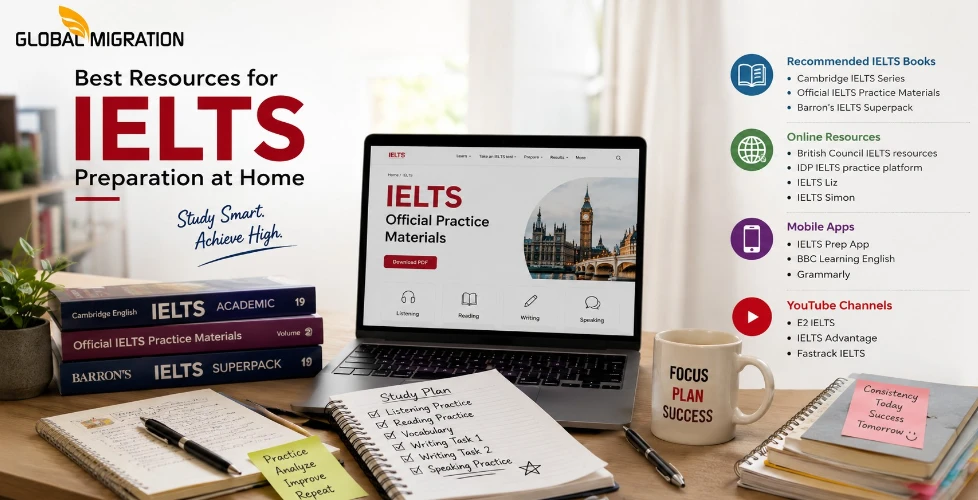
Using authentic and reliable resources is critical.
Recommended IELTS Books
- Cambridge IELTS Series
- Official IELTS Practice Materials
- Barron’s IELTS Superpack
Online Resources
- British Council IELTS resources
- IDP IELTS practice platform
- IELTS Liz
- IELTS Simon
Mobile Apps
- IELTS Prep App
- BBC Learning English
- Grammarly
YouTube Channels
- E2 IELTS
- IELTS Advantage
- Fastrack IELTS
Avoid relying only on social media shortcuts or memorized answers. Authentic practice is the best way to improve your score.
How to Improve IELTS Listening Skills at Home
Listening can be difficult for many Pakistani students because of unfamiliar accents and fast speech.
Effective Listening Tips
Listen to English Daily
Watch:
- BBC News
- TED Talks
- English documentaries
- Podcasts
Practice Note-Taking
Train yourself to quickly write important points while listening.
Improve Concentration
Avoid distractions during practice sessions.
Learn Different English Accents
IELTS recordings may include:
- British accents
- Australian accents
- Canadian accents
Practice Mock Tests
Take at least 3–4 listening tests weekly.
Regular listening practice is one of the best ways to improve your overall IELTS performance.
IELTS Reading Preparation Tips
The reading section tests your speed and comprehension abilities.
Learn Skimming and Scanning
- Skimming helps identify the main idea quickly
- Scanning helps locate specific information
Improve Vocabulary
Learn:
- Synonyms
- Academic words
- Common IELTS vocabulary
Read English Content Daily
Read:
- Newspapers
- Blogs
- Academic articles
- Magazines
Manage Time Properly
Do not spend too much time on one question.
Many students struggle with time management, so practicing under timed conditions is essential.
How to Prepare for IELTS Writing at Home
Writing is often considered the most challenging section of IELTS.
Understand Task Requirements
Task 1
- Graphs
- Charts
- Processes
- Maps
Task 2
Essay writing on social, educational, or global topics.
Improve Grammar
Focus on:
- Sentence structure
- Tenses
- Articles
- Punctuation
Learn Academic Vocabulary
Avoid repetitive words and simple vocabulary.
Practice Daily Writing
Write:
- Essays
- Reports
- Opinion paragraphs
Analyze Model Answers
Compare your answers with Band 7 or Band 8 samples.
Common Writing Mistakes
- Memorized essays
- Poor paragraph structure
- Lack of coherence
- Grammar errors
Students aiming for Band 7+ should focus heavily on clarity, grammar accuracy, and organization.
Read more: IELTS vs Duolingo English Test: Which One is Better for Study Abroad in 2026?
IELTS Speaking Practice at Home
Many students feel nervous during the speaking test.
The best way to improve speaking is through regular practice.
Speaking Practice Tips
Speak English Daily
Try speaking English with:
- Friends
- Family members
- Online partners
Practice in Front of a Mirror
This helps improve confidence and body language.
Record Your Answers
Listen to your pronunciation and fluency.
Learn Common Topics
Practice topics such as:
- Education
- Technology
- Hobbies
- Travel
- Environment
Avoid Memorized Answers
Examiners can easily identify memorized responses.
Confidence and fluency are more important than using very difficult vocabulary.
Common Mistakes Students Make During IELTS Preparation
Understanding mistakes can help you avoid losing valuable marks.
Common IELTS Preparation Mistakes
- Ignoring time management
- Using difficult vocabulary incorrectly
- Memorizing speaking answers
- Lack of mock test practice
- Weak grammar foundation
- Inconsistent study routine
- Not reviewing mistakes
Students preparing at home should regularly evaluate their progress.
Importance of Mock Tests in IELTS Preparation
Mock tests are extremely important because they simulate the real exam environment.
Benefits of Mock Tests
Improve Time Management
You learn how to complete tasks within strict time limits.
Identify Weak Areas
You can determine whether you struggle with:
- Listening
- Writing
- Reading
- Speaking
Build Confidence
Regular practice reduces exam anxiety.
Track Progress
You can monitor improvements over time.
Experts recommend taking at least one full mock test every week.
Can You Prepare for IELTS at Home Without an Academy?
Yes, absolutely.
Many students successfully achieve Band 7 or even Band 8 without joining coaching centers.
Advantages of Self-Study
- Flexible schedule
- Lower cost
- Personalized learning pace
- Access to unlimited online resources
Challenges of Self-Study
- Lack of discipline
- Difficulty identifying mistakes
- Limited speaking feedback
Students who remain consistent and motivated can perform exceptionally well through home preparation.
However, some students may still benefit from professional guidance, especially for writing and speaking evaluation.
Read more: Must Know IELTS Preparation Tips for 2026
How Global Migration Advisors Can Help
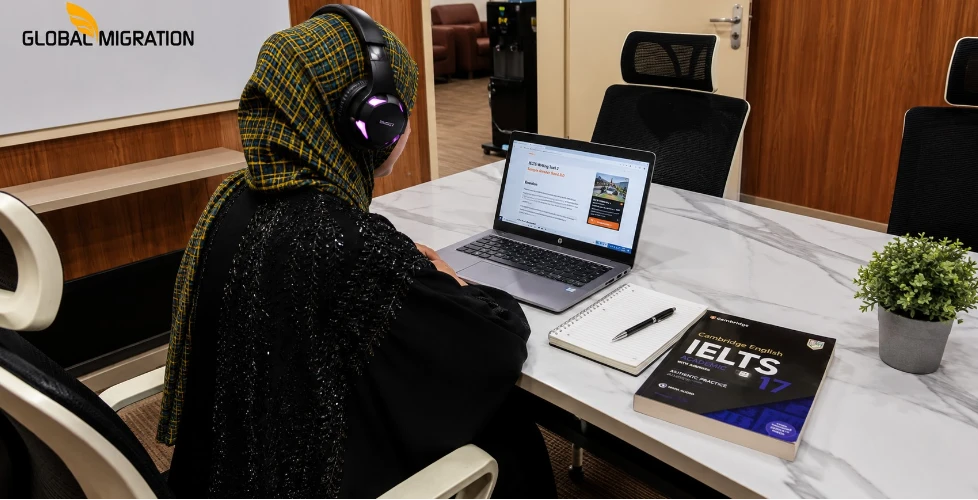
Global Migration Advisors provides professional support for students planning to study abroad.
Their services include:
- IELTS and PTE preparation guidance
- Study abroad counseling
- University admission assistance
- Student visa consultancy
- Interview preparation support
Whether you want to study in the UK, Lithuania, or other international destinations, expert guidance can make the process smoother and more successful.
Students can also receive advice regarding university selection, visa documentation, and scholarship opportunities.
Frequently Asked Questions (FAQs)
Can I prepare for IELTS at home?
Yes. With proper planning, authentic resources, and regular practice, students can successfully prepare for IELTS at home.
How many hours should I study daily for IELTS?
Most students should study 2–4 hours daily depending on their current English level and target band score.
Is 1 month enough for IELTS preparation?
It may be enough for students with strong English skills. Beginners usually require 2–3 months of preparation.
Which IELTS section is the most difficult?
Many students find the writing section the most challenging because it requires grammar accuracy, organization, and vocabulary skills.
What is the best free IELTS preparation resource?
British Council and IDP offer reliable free IELTS preparation materials online.
How can I improve my IELTS speaking score at home?
Practice speaking English daily, record your answers, improve pronunciation, and avoid memorized responses.
Conclusion
Learning how to prepare for IELTS at home is completely possible with consistency, discipline, and the right resources. Students no longer need to rely only on expensive academies to achieve high band scores.
A proper study plan, regular mock tests, vocabulary improvement, and continuous practice in all four sections can significantly improve your IELTS performance.
If you are planning to study abroad and need expert support for IELTS preparation, university admissions, or student visa guidance, contact Global Migration Advisors today and take the first step toward your international education journey.