
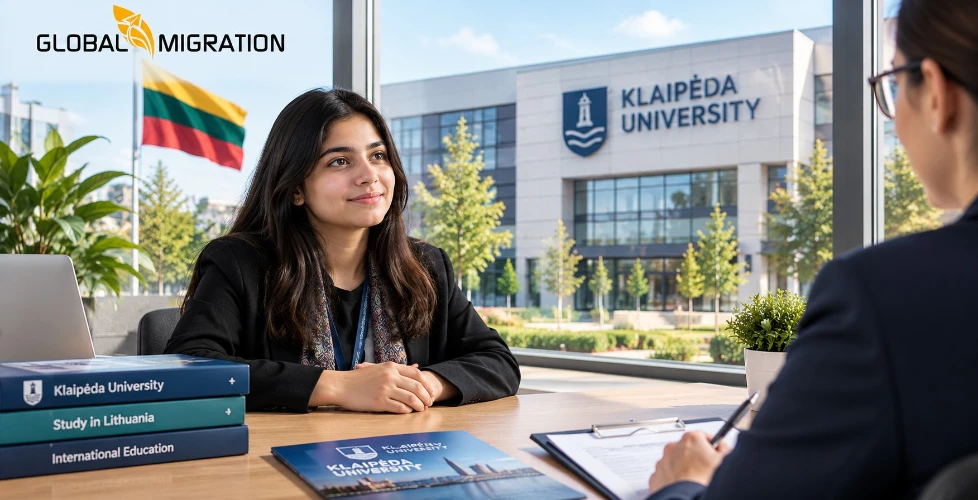
Every year, more Pakistani students choose to study in Lithuania. The reasons are simple: EU-recognized degrees, affordable tuition, and an admission process that feels far less complicated than most Western European options.
Klaipeda University sits in Lithuania’s main port city on the Baltic Sea. It is one of the most popular picks for students who want to study in Lithuania from Pakistan — but it is also known for a motivational interview that catches a surprising number of applicants off guard.
Strong grades alone are not enough here. Many students with excellent academic records still fail this stage, simply because they walk in unprepared.
This guide breaks the whole process down: what the interview really checks, the questions to expect, and how to move from a successful interview to your Lithuania study visa.
Why the Klaipeda University Interview Really Matters
Not every university interviews its applicants. Klaipeda University does, because it wants to confirm your motivation is genuine before it commits a seat to you.
The admission process runs through an academic evaluation commission. Once your file is reviewed favourably, the university issues a conditional offer and books an online interview as the final check before a decision. Anyone serious about how to study in Lithuania should treat this stage as a genuine checkpoint, not a formality.
What Interviewers Are Really Evaluating
Behind every question, interviewers are checking two things. Is your intention to study genuine? And can you realistically afford your education and stay in Lithuania?
Vague or generic answers rarely pass. Interviewers are trained to notice when a student has not done real homework before deciding to study in Lithuania from Pakistan.
- A clear, honest motivation — not just “better opportunities,” but real academic and career reasoning.
- Evidence you’ve researched Lithuania, the university, and the programme itself.
- A realistic financial plan that covers tuition, living costs, and insurance.
- A concrete plan beyond admission — what you’ll study, and where it leads.
Keep your motivation personal. Never say “better opportunities” on its own — tie your answer to a specific course, skill gap, or career goal you can actually explain.
The Klaipeda University Application and Interview Timeline
Knowing the timeline helps you prepare properly and avoid last-minute stress. It also matters if your plan to study in Lithuania is tied to a specific intake date.
| Stage | What Happens | Typical Timeframe |
|---|---|---|
| 1. Apply & Pay Fee | Submit application, documents, and application fee | Start of process |
| 2. Interview Scheduling | University confirms fee, then issues interview date | ~1 month after fee |
| 3. Interview Day | Faculty or admissions commission conducts online interview | Scheduled date |
| 4. Decision | University shares result via portal or email | 3 days to 1 week |
| 5. Visa Application | Apply for national D visa after acceptance | Before travel dates |
Applying early gives a real advantage to any study in Lithuania from Pakistan plan. Early applicants get earlier interview slots and more breathing room overall.
More time also means more room to fix a document issue or arrange a visa appointment later without panic.
Students who apply close to the deadline often end up rushing the interview stage. Rushed answers are the easiest thing for an experienced interviewer to spot.
How to Prepare: The Practical Basics
Before we get to sample questions, get the technical setup right. This alone eliminates a lot of avoidable mistakes for anyone hoping to study in Lithuania.
Always use a laptop, never a phone. A laptop gives a stable camera angle, better audio, and easy access to documents if you’re asked to share your screen.
Increasingly, interviewers ask candidates to share their screen — your application portal, academic documents, even your desktop. Keep it clean before you sit down to study in Lithuania from Pakistan on camera.
Test your internet connection and audio in advance. A stable wired or strong Wi-Fi connection avoids awkward interruptions mid-answer.
Sit in a quiet, well-lit space with a neutral background. Dress the way you would for an in-person meeting, not a casual video call.
Keep your documents within reach: offer letter, transcripts, financial proof, and passport. The interviewer may ask to see any of these on screen.
Common Klaipeda University Interview Questions
Interviewers cross-question. If you mention a specific research interest, expect a follow-up asking you to elaborate. Understand your own answers — don’t just memorize a script.
Why Lithuania? Interviewers want to know why you chose Lithuania over other European destinations. “It’s affordable” isn’t enough — connect your answer to your career goals and the value of a plan to study in Lithuania.
Why this university and this programme? Generic answers fail fastest here. Be ready to explain why Klaipeda University fits your field, and expect follow-up questions on your programme’s core subjects.
If your background doesn’t line up perfectly with your chosen course, our guide on how to study in Lithuania without a relevant academic background walks through how to frame that gap honestly.
Lithuanian culture and university facilities. You may be asked about daily life in Klaipeda, student services, libraries, labs, or accommodation. A little research here shows genuine interest fast.
Your background, finances, and experience. Expect questions about your academic history, relevant work, and how your family will fund tuition and living costs — a core part of any serious plan to study in Lithuania from Pakistan.
At Global Migration Advisors, we’ve guided hundreds of students through exactly this process. You can see our full range of services at globalmigration.pk.
| Focus Area | What They’re Checking | How to Prepare |
|---|---|---|
| Motivation | A genuine, specific reason to study | Link your goals to one clear course or career path |
| Country & City | Real knowledge of Lithuania and Klaipeda | Research daily life, culture, and safety |
| Programme Fit | Understanding of the curriculum | Study the syllabus and connect it to your past |
| Finances | Ability to fund tuition and stay | Prepare a clear, honest financial plan |
| Consistency | Whether answers hold up under follow-up | Practice mock interviews before the real one |
From Interview Success to Your Lithuania Student Visa
Passing the interview is a major milestone, but it isn’t the finish line. Your student visa is the next real step in any plan to study in Lithuania.
Non-EU students, including Pakistanis, must apply for a national D visa before travelling. Lithuania does not issue this visa on arrival.
You generally apply in person at the Lithuanian Embassy or an authorized visa centre, and a mediation letter from the university is required.
For a full walkthrough of this stage, our guide on the Lithuania Embassy Pakistan student visa process covers it step by step.
Visa decisions are typically made within 15 days of the embassy receiving your application, though this can vary by embassy workload.
Some embassies recommend applying by August 1st for the autumn intake and December 1st for spring. Don’t wait until the last minute if you’re set on a plan to study in Lithuania from Pakistan.
You’ll also need valid health insurance covering your full stay, with minimum coverage of EUR 30,000, valid across the Schengen area.
Students on a national study visa are not permitted to work during their studies. Your financial documents need to show your education and living costs are fully covered from other sources.
Why Study in Lithuania Is a Smart Choice for Pakistani Students
Lithuania has quietly become one of the more attractive destinations for students who want to study in Lithuania. Pakistanis are now among the largest groups of international students there.
Several hundred Pakistani nationals receive study-based residence permits each year, alongside students from India and Belarus.
The reasons are straightforward: EU-recognized degrees, English-taught programmes, and lower tuition and living costs compared to Western Europe.
It also opens a genuine pathway into the wider Schengen area for future opportunities — one more reason so many families choose to study in Lithuania from Pakistan.
How We Help You Succeed in Your Interview
Passing the Klaipeda University interview isn’t about luck. It’s about structured, honest preparation.
We give every student a detailed question-and-answer document — covering everything from “why Lithuania” to financial and cultural questions — with sample answers meant to guide, not script, your prep.
We run realistic mock interviews that mirror the real format, including screen-sharing scenarios, so nothing on the actual day feels unfamiliar.
After each mock session, we help you fix weak spots — an unclear programme explanation, a shaky financial plan, or answers that sound rehearsed rather than genuine.
Our dedicated interview-prep team focuses on this stage specifically, so students get focused coaching rather than generic advice when they’re serious about their plan to study in Lithuania.
Frequently Asked Questions
How long after applying will I get an interview date?
Usually about a month after your application fee is confirmed.
How soon will I know my interview result?
Most students hear back within three days to a week, sometimes longer in peak season.
Can I do the interview on my phone?
It’s not recommended. A laptop gives better audio, video, and screen-sharing access.
What visa do I need after acceptance?
The Lithuania national D visa, applied for at the embassy before you travel.
Can I work while studying on a student visa?
No. Students on a national study visa cannot work during their studies.
Final Thoughts
The Klaipeda University interview isn’t designed to trip you up — it’s designed to confirm you’re ready. Genuine motivation, real research, and a clear financial plan go a long way.
If you’re serious about a plan to study in Lithuania from Pakistan, start early. Preparation beats memorization every time, and the rest of the process — visa included — becomes far less stressful.