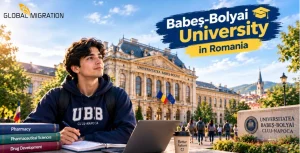
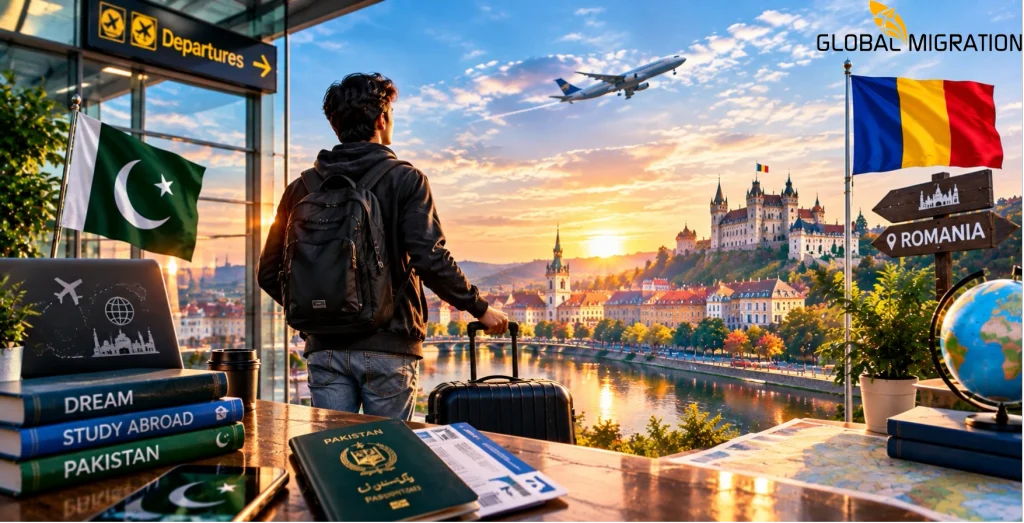
Your admission letter is in, your family is celebrating, and then one embassy interview decides whether the dream becomes a flight to Bucharest.
Every year, thousands of Pakistani students look past the expensive study destinations and land on the same idea: study in Romania. Tuition is modest, living costs sit well below most of Western Europe, and English-taught programmes in medicine, engineering, business and IT mean you can start without learning a new language first. Then comes the question every family asks next: is the visa actually easy? Here is the honest answer, the latest success ratio, what the embassy really looks at, and how to walk into your interview prepared.
Is It Easy to Get a Romania Student Visa from Pakistan?
Short answer: no, but it is very winnable.
Studying in Romania is economical, but the visa is demanding, because the embassy is testing two things at once: whether you genuinely intend to study, and whether your family can genuinely afford it. The process rewards students who are well prepared, well documented and honest. It punishes shortcuts.
Romania Student Visa Success Rate 2026: What Changed This Year
Visa outcomes are never fixed, and the Romania study visa shows it clearly. Last year the ratio for Pakistani applicants was good, and many well-prepared students were approved. By mid-2026 the picture had changed: in July and August refusals were high and the success rate fell below 10%, a painful stretch for families who had already paid for admission and prepared their files. In September it recovered to roughly 45 to 50%.
Ratios are approximate, based on recent applicant outcomes, and change month to month. Last year’s bar is indicative only, because no exact figure is quoted.
That is a real improvement, but it still means about half of applicants are refused. The same embassy that approved most applicants last year refused the vast majority within a few months, so the deciding factor is the quality of your own application and interview, not the country’s reputation.
Want the full breakdown? Read our Romania student visa success rate 2026 for Pakistani students.
Why Is Romania Winning Over So Many Pakistani Students?
High demand is exactly why every file is examined closely. If you plan to study in Romania from Pakistan, here is what pulls students in:
How Does the Romanian Embassy in Islamabad Evaluate Your Visa Application?
Every question in the interview and every page in your file feeds one of two decisions.
Does this student genuinely intend to study?
The officer wants confidence that you are going to Romania to study, not to use a student visa for another purpose.
Can the family actually afford it?
Your studies must be funded by income that is real, traceable and sustainable for the whole programme.
On the first question, officers typically explore the following:
- Learning potential. Your academic record, your progress and whether the course fits your background.
- Your reasoning. Why you picked this specific course and university.
- Why Romania. What drew you here, beyond “it is cheaper”.
- Other countries you considered. Genuine applicants have usually compared options, and having no answer can look like weak research.
- Future plans. What you intend to do after graduating.
- Value of the degree. How a Romanian qualification helps you personally and professionally.
Clear, consistent answers make you look like someone who has made a real decision. Memorised, generic or contradictory ones raise doubts quickly.
Practise your “Why Romania?” answer out loud without using the word “cheap”. If you can’t, your research isn’t finished yet.
That brings us to the second question, and the one that catches most applicants off guard.
Walk into the embassy prepared.
Honest profile assessment, document and financial file review, and mock interviews on intention, finances and English fluency, plus IELTS, PTE and Duolingo coaching.
Book a free consultationglobalmigration.pk · Lahore, Pakistan
Financial Requirements for a Romania Study Visa: What Officers Check
On paper, a long-stay (D/SD) study visa asks for proof of acceptance, tuition payment, accommodation and the means to support yourself. In the interview, the embassy goes deeper and asks whether your funding story holds together:
- Traceable. Tax returns are usually required to show that the sponsor’s income is documented and can be traced.
- Consistent. The income on paper should make sense for the family’s circumstances, profession and lifestyle.
- Sustainable. Funds must cover the full duration of the programme, not only the first year.
Not sure how much proof you need? Read our guide to Romania study visa financial requirements.
Here is where capable students stumble. If 60% or more of your family’s income would go on your studies in Romania, expect follow-ups such as: How will the rest of the family manage? Why are your parents spending so much on your education? What about your siblings?
These are not trick questions. They test whether your plan is realistic and whether you have thought about it honestly. Know your family’s income sources, explain calmly why your family chose to invest in your education, speak naturally about your siblings, and never offer figures you cannot support with documents.
Sit down with your sponsor before the interview and walk through the tax returns together. When you can explain every figure calmly, the financial questions stop being scary.
Romania Student Visa Interview: What Does the Embassy Ask?
The Romanian embassy in Islamabad conducts face-to-face interviews, and this stage carries real weight. Officers check whether you can speak English fluently and independently, which matters most if you are applying to an English-taught programme: a natural conversation about your studies, plans and background, without rehearsed scripts or outside help.
They also review your documents during the interview and compare them with what you say. Describe the family business one way while the tax records suggest another, and the mismatch will be noticed. The safest approach is to understand every paper in your file and explain it in your own words.
Want sample questions? Read our Romania student visa interview questions and answers.
Here is what the most common questions are really testing:
| Question | What it tests | What a strong answer sounds like |
|---|---|---|
| Why Romania and this university? | Genuine intention and research | Specific reasons tied to your course and career, not just cost |
| Which other countries did you consider? | Depth of research | A short, honest comparison and why Romania came out ahead |
| How will your family manage the cost? | Financial sustainability | Clear income sources and how your education fits the budget |
| Can you explain this document? | Consistency | Your own words, matching what you said and what the paper shows |
| What will you do after graduating? | Future plan | A concrete plan linked to your degree |
Notice the pattern: none of these questions can be answered well from memory. They reward students who actually understand their own file.
Documents Required for a Romania Student Visa from Pakistan
Think of your visa file as a story the officer reads in a matter of minutes: who you are, what you will study and who is paying. Documents never win a visa on their own, but one missing page or one mismatched number can lose it.
Preparing your funds proof? Read our guide to Romania student visa bank statement requirements.
So what goes into that story? It opens with your Letter of Acceptance for studies, issued through the Romanian Ministry of Education, which proves you hold a genuine full-time seat, backed by proof of tuition payment that shows you are committed to the programme. Next comes the money trail: your sponsor’s tax returns show income that is documented and traceable, while your bank statements should show funds that match that income story. Add proof of accommodation to show you have planned where you will live, and your academic documents and admission papers to back up your learning potential and course choice. The visa application form and the $350 study visa fee complete the file.
Before you apply, always check the current requirements on evisa.mae.ro and with the Embassy of Romania in Islamabad, because they can change. And remember that the officer will compare these papers with your answers in the interview, so every name, date and figure must agree.
The legal decision term for a D/SD visa is 60 days, and applying does not guarantee approval.
Romania Student Visa Process: Step by Step
- Start hereSecure your admission
Your university nominates you and the Romanian Ministry of Education issues your Letter of Acceptance for studies.
- Before you applyBuild your visa file
Gather the acceptance letter, tuition and accommodation proof, financial documents and your application form.
- 45+ days before departureLodge your D/SD application
Apply at least 45 days before departure, but not earlier than three months before you travel.
- Interview dayAttend the interview
Answer in your own words and be ready to explain every document.
- Up to 60 daysWait for the decision
The legal term is 60 days. After arrival, you apply to extend your temporary residence in Romania.
Why Do Romania Student Visas Get Refused?
Most refusals trace back to a handful of patterns. Officers lose confidence when reasons for choosing Romania sound rehearsed, when an applicant has never compared other destinations or has no plan beyond graduation, and when spoken English is too weak to answer independently. Money trips up just as many files: income that is hard to trace, tax papers that do not support the claimed finances, or a study budget swallowing most of the family’s income without a convincing explanation. And the quickest way to sink a strong file is a mismatch between what you say and what your documents show.
Want the full list? Read our guide to Romania student visa refusal reasons 2026.
How to Boost Your Romania Visa Chances: 4 Winning Moves
Four moves separate prepared applicants from the rest:
- 1Choose the right programmeMatch the course to your background and explain how it leads to your career plan.
- 2Research your alternativesKnow why you considered other countries and why Romania won.
- 3Build a financial file you understandMake your tax returns and income evidence tell one consistent story.
- 4Practise the interviewRun mock interviews in English, follow-up questions included.
Mock interviews work best when someone interrupts with follow-ups. The first answer is easy; the third question is where preparation shows.
What to Do If Your Romania Student Visa Is Refused
A refusal is a signal, not a verdict. Before you reapply, work out what weakened the file: unclear intention, affordability concerns, weak English, or mismatches between your answers and your documents. Fix those first, rebuild your file and practise again, because reapplying with the same story tends to produce the same outcome.
Frequently Asked Questions
Is it easy to get a Romania student visa from Pakistan?
No. Studying in Romania is affordable, but the visa requires strong evidence of genuine intention to study and the ability to fund your education.
What is the Romania student visa success rate right now?
After falling below 10% in July and August, the success ratio improved in September and is now around 45 to 50%. Rates can change, so always check current trends with your consultant.
Does the Romanian embassy interview students?
Yes. The Romanian embassy in Islamabad conducts face-to-face interviews, and English communication and fluency matter.
What documents are important for a Romania study visa?
Your Letter of Acceptance, academic documents and admission papers, proof of tuition and accommodation, and tax returns that show traceable and sustainable income. Check the current list on evisa.mae.ro before you apply.
How long does a Romania student visa take?
The legal term for a decision on a D/SD visa is 60 days. Apply at least 45 days before departure, but not earlier than three months before you travel.
How much is the Romania student visa fee?
The Romania study visa fee is $350.
What is the biggest reason for refusal?
Weak answers about genuine intention, concerns about affordability, or inconsistencies between what the student says and what the documents show.
Can I work with a Romania study visa?
Non-EU students can work part-time, up to four hours a day, without a separate work permit. It is useful pocket money, not a way to fund your tuition.
So, Is It Easy to Get a Romania Visa from Pakistan?
Not easy, but achievable with the right preparation. Studying in Romania is affordable, which makes it attractive. The visa is difficult, because the embassy scrutinises both your intention to study and your ability to pay. Success rates move, from good last year to below 10% in July and August and back to roughly 45 to 50% in September, so interview performance is decisive: fluent English, consistent answers and documents that match your statements make the biggest difference.
Students who treat the visa as a serious process give themselves the best chance, while those who underestimate it often learn the hard way. For an honest view of where your profile stands before the embassy sees it, speak with professional study abroad consultants for Romania. Requirements and success ratios change, so confirm the latest details with the embassy before you apply.