Getting a visa can feel confusing. One missing paper can delay your dream. This guide fixes that problem.
We break down every document you need. No guesswork. No outdated info. Just facts from the official Italian Embassy in Islamabad.
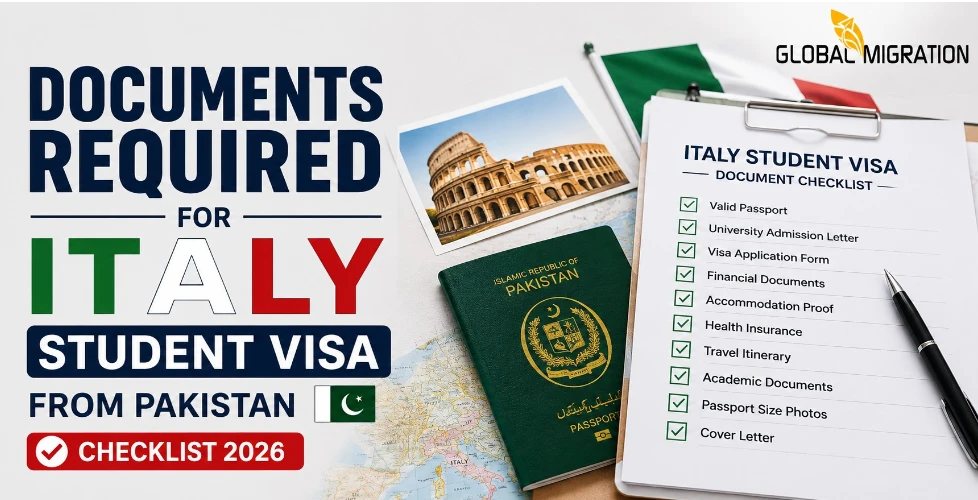
If you plan to study in Italy, this checklist is your starting point. Save it. Print it. Use it.
Italy has become a top choice for Pakistani students in recent years. The reasons are simple: low tuition, quality degrees, and a rich culture.
But the visa stage is where many applications stumble. Not because students lack merit. Usually, it’s paperwork.
This guide walks through every required document. It also explains why each one matters, so nothing feels confusing.
Every year, many bright students lose their chance simply due to incomplete files. Don’t let that happen to you.
Read this checklist fully before you start collecting documents. It will save you time, money, and stress.
Why the Right Documents Matter So Much
Italy’s visa process is strict. Small errors cause big delays.
Missing paperwork is the top reason for rejection. The embassy checks every file carefully.
Students who study in Italy from Pakistan each year face the same challenge. Most rejections are avoidable.
A complete file means faster approval. It also means less stress for you and your family.
Types of Italy Student Visas
Italy issues two visa types for students. Knowing the difference saves time.
Type C is for short courses. Type D is for full degree programs.
Most students who study in Italy for a bachelor’s or master’s need Type D. It allows a longer stay.
Here is a quick comparison to make it clear.
| Feature | Type C Visa | Type D Visa |
|---|---|---|
| Purpose | Short courses, entry tests | Full degree programs |
| Duration | Up to 15 days | Over 90 days |
| Residence Permit Needed | No | Yes, within 8 days of arrival |
| Flight Booking Type | Round trip | One-way |
Complete Document Checklist (Official List)
This list follows the exact requirements from the Italian Embassy in Islamabad. Nothing is skipped.
Read each point carefully. Prepare copies of everything.
Anyone who plans to study in Italy from Pakistan should follow this order.
- Completed visa application form — filled in English or Italian, block letters, signed and dated.
- Two recent photographs — passport size, white background, taken within the last six months.
- Valid passport — must be valid for at least 18 months, with two blank pages. Old passports must be attached too.
- Acceptance letter — from the Italian university, showing course duration and start date.
- Pre-enrollment Form-A — required if pre-enrollment applies, signed with a photo attached.
- Entry test details — if the university needs one, the date must appear on the acceptance letter.
- Educational documents — degree and transcripts, attested by HEC, IBCC, and MOFA.
- Declaration of Value (DOV) — required if the Italian institution asks for it.
- Tuition fee receipt — proof of payment, if required by the university.
- Financial documents — sponsor affidavit, bank statement, tax returns, and proof of relationship.
- IELTS certificate — original plus one photocopy.
- Family Registration Certificate — issued by NADRA, with a photocopy.
- Proof of accommodation — hostel booking or rental agreement in Italy.
- Flight booking — round trip for short stays, one-way for long stays.
- Travel medical insurance — coverage should match your course duration, typically 1–2 years.
Keep two extra copies of every document. It saves time during your interview.
Financial Proof: What the Embassy Really Wants
Money proof is often the trickiest part. The embassy checks it very closely.
You need a sponsor affidavit. This shows who is paying for your studies.
A recent bank statement is required too. It must include the account opening date and signatory details.
Students aiming to study in Italy must also submit two years of tax returns for the sponsor.
Sudden large deposits raise red flags. Build your savings gradually, not overnight.
Proof of relationship with your sponsor is also mandatory. A birth certificate or family registration usually works.
Consistency matters more than a big number. The embassy wants to see stable savings, not one-time transfers.
If your sponsor is self-employed, add extra proof. Business registration papers or income tax certificates help strengthen the file.
Salaried sponsors should attach salary slips. Along with bank statements, this builds a complete financial picture.
Many consultants who help students study in Italy recommend opening a savings account at least six months before applying. This shows a genuine financial history.
Document Translation and Legalization Requirements
Documents not in English or Italian may need translation. Check this with your visa center in advance.
A certified translator is usually preferred. This helps avoid confusion during document checks.
Some documents may also need legalization afterward. This step confirms the translation is accurate.
Students who study in Italy from Pakistan should ask their consultant which documents apply to them.
Keep both the original and translated copies together. Embassies often want to see both side by side.
Where and How to Submit Your Documents
Pakistani students submit visa applications through designated visa application centers. These centers handle Islamabad, Karachi, and Lahore regions.
You must apply within your consular jurisdiction. Applying from the wrong region can cause automatic rejection.
Book your appointment online first. Walk-in submissions are generally not accepted.
Arrive with a printed appointment confirmation. Bring your full document folder, organized and labeled.
Anyone planning to study in Italy should confirm their correct jurisdiction before booking.
Declaration of Value (DOV) and HEC Attestation Explained
The DOV compares your Pakistani degree with the Italian education system. It is not always required.
Your university will tell you if you need one. Always confirm this in writing.
If needed, apply through the Italian Embassy’s DOV request form. Attach your attested transcripts.
This step matters a lot for anyone planning to study in Italy from Pakistan at the undergraduate or postgraduate level.
Processing can take several weeks. Start early to avoid delays.
Health Insurance: A Non-Negotiable Requirement
Every applicant needs travel health insurance. This is not optional.
Generally, coverage should match your course duration, often around 1–2 years for a study program.
Short-term visas need shorter coverage. Long-term study visas need longer, renewable coverage.
Buy this policy from a recognized insurance provider. Keep both the original and a photocopy.
Document Requirements: Bachelor’s vs Master’s Applicants
Requirements shift slightly by degree level. Here is a simple comparison.
| Requirement | Bachelor’s Applicants | Master’s Applicants |
|---|---|---|
| Prior Documents | Intermediate/A-Level certificate | Bachelor’s degree and transcript |
| Entry Test | Often required (IMAT for medicine) | Usually not required |
| DOV Requirement | Often needed | Depends on university |
| Language Proof | IELTS or Italian B1/B2 | IELTS or Italian B2/C1 |
Visa Interview: What to Expect
The interview is usually short. But preparation still matters.
Officers commonly ask why you chose Italy. They also ask about your course and university.
Be ready to explain your funding source clearly. Confusion here raises doubts.
Practice simple, honest answers. Avoid memorized scripts that sound rehearsed.
Students who study in Italy from Pakistan report that calm, clear answers work best. Confidence matters more than perfect English.
After Visa Approval: The Residence Permit
Getting the visa is not the final step. A residence permit follows soon after arrival.
Type D visa holders must apply for this permit within eight days of landing in Italy.
The application goes through the local post office, using the “Kit Postale.”
You’ll also need a fiscal code, called the Codice Fiscale. Most universities help students obtain this quickly.
This step keeps your stay in Italy fully legal beyond 90 days.
Popular Italian Universities Among Pakistani Students
Certain universities are especially popular due to English-taught programs and strong rankings.
Politecnico di Milano is known for engineering and design. Sapienza University of Rome offers a wide range of disciplines.
University of Bologna, one of the oldest in the world, attracts students in law, humanities, and sciences.
University of Padua is popular for medicine and research programs.
Choosing the right university shapes your entire application. Course structure often affects your document requirements too.
Scholarships That Can Support Your Application
Italy offers strong scholarship support for international students. This can reduce your financial burden significantly.
The DSU regional scholarship is need-based. It considers family income more than academic scores.
Some universities also offer merit-based tuition waivers. These are worth checking during your application.
A scholarship award letter can also strengthen your financial proof for the visa. Always attach it if you receive one.
Common Mistakes That Cause Visa Rejection
Most rejections come from small, avoidable errors. Watch out for these.
Incomplete financial files are the biggest issue. Every paper must match and make sense together.
Unattested educational documents also cause delays. Always confirm HEC and MOFA stamps before submission.
Many students planning to study in Italy forget the family registration certificate. Don’t skip small items.
Mismatched signatures between forms and passports also raise concerns. Double-check every signature.
Expired passports or passports with fewer than two blank pages also cause problems. Renew early if needed.
Weak cover letters hurt applications too. Your letter should clearly state your study plan and career goals.
Some students submit photocopies instead of originals where originals are required. Always follow the checklist exactly.
Mismatched insurance duration is another common slip. Confirm your policy covers your full course length.
Visa Fee and Processing Time
Budget for both the visa fee and the service charge. They are separate costs.
The long-stay national visa fee is currently EUR 116, roughly PKR 37,790. Rates are set by the embassy every quarter.
Processing usually takes 45 to 90 days. Apply early to avoid last-minute stress.
This timeline applies to most students who study in Italy from Pakistan each intake.
| Cost Item | Fee (EUR) | Approximate PKR |
|---|---|---|
| Long-Stay National Visa (D) | 116.00 | 37,790 approx. |
| Short-Stay Visa (Type C) | 90.00 | 29,320 approx. |
| Visa Center Service Fee | — | 11,000 approx. |
Fees change every quarter. Always confirm current rates on the official Embassy of Italy Islamabad website before applying.
Step-by-Step Application Process
Follow these steps in order. Skipping steps causes confusion.
First, secure your university acceptance letter. This unlocks every other step.
Second, gather and attest all educational documents. HEC and MOFA stamps are essential.
Third, arrange your financial proof. Sponsor documents take the longest, so start early.
Fourth, buy your health insurance policy. Confirm the coverage duration matches your course.
Fifth, book your visa appointment online. Slots fill up fast during peak season.
Sixth, attend your interview with a complete file. Bring originals and copies of everything.
Following this order helps every applicant who wants to study in Italy avoid unnecessary back-and-forth.
Seventh, wait for the decision. Avoid calling repeatedly, as processing follows its own timeline.
Eighth, once approved, collect your passport and prepare for travel. Double-check your flight and accommodation dates match your visa.
Cost of Living: What to Budget Alongside Your Visa
Visa documents are just one part of planning. Living costs matter too.
Monthly expenses in Italy typically range from €700 to €1,000. This covers rent, food, and transport.
Smaller cities are cheaper than Milan or Rome. Many students choose these cities to save money.
Shared apartments reduce rent significantly. This is a popular option among study in Italy applicants on a budget.
Public transport passes are affordable for students. Many cities offer discounted rates with a valid student ID.
Planning your budget alongside your visa file gives a fuller, more realistic picture. It also strengthens your financial credibility with the embassy.
Timeline: When to Start Preparing
Good timing makes the whole process easier. Rushing leads to mistakes.
Start six months before your intended intake. This gives room for attestations and translations.
At four months, finalize your university acceptance letter. Begin building your financial documents.
At three months, apply for your DOV if required. Also arrange your health insurance policy.
At two months, book your visa appointment. Slots can fill quickly during busy seasons.
At one month, do a final review of your full document folder. Confirm every attestation and translation is complete.
This timeline works well for most students who study in Italy from Pakistan. Starting early removes unnecessary pressure later.
How Expert Guidance Can Help
Visa rules change often. Keeping up alone can be hard.
A good consultant reviews your file before submission. This catches errors early.
They also track updated embassy requirements. This keeps your application current and accurate.
Many students who successfully study in Italy credit proper guidance for a smoother process. Expert support reduces stress significantly.
Whether you apply alone or with help, preparation is what truly matters. Documents done right the first time save weeks of delay.
Frequently Asked Questions
1. How much bank balance is needed for an Italy student visa?
You generally need enough to cover one year’s tuition and living costs. Exact amounts vary by university and city.
2. Is IELTS compulsory for all Italian universities?
No. Some universities waive it if your previous education was in English. Always check with your specific university.
3. What is the Declaration of Value (DOV)?
It is a document comparing your Pakistani degree to Italian education standards. Not every university requires it.
4. How long does visa processing take?
It usually takes between 45 and 90 days. Apply as early as possible.
5. Can I work part-time on a student visa in Italy?
Yes. International students can typically work up to 20 hours per week during their studies.
6. Where do Pakistani students apply for the visa?
Applications go through the Italian Embassy in Islamabad or the Consulate in Karachi, depending on residence.
Final Thoughts
The Italy student visa process is manageable with the right preparation. Documents are the key.
Follow this checklist step by step. Double-check every attestation and financial paper.
Thousands of students successfully study in Italy from Pakistan every year. With careful planning, you can too.
Start early, stay organized, and your Italian education journey can begin smoothly.
Every document you prepare today brings you one step closer to your Italian classroom tomorrow. Stay patient, stay accurate, and trust the process.
Your journey to Italy starts with a single, complete file. Make it count.
Need expert guidance for your visa file? Reach out to the best study abroad consultants for Italy for personalized support.